The Path of Least Resistance: Civic Degradation, Corrupt Politicians, and the Collapse of Personal Accountability
In our first two articles, we traced the destructive trajectory of America’s shocking illiteracy crisis. We examined how cognitive deficits and emotional alexithymia dismantle the private sanctity of marriage, and how the resulting structural exclusion from the legal economy serves as the primary engine for poverty, recidivism, and violent crime. Yet, there remains a final, even more insidious frontier to this perfect storm: the systematic collapse of our civic infrastructure, political institutions, and democratic accountability.
When a population loses its capacity for critical thinking, written evaluation, and long-form cognitive synthesis, a constitutional republic ceases to function as intended. It degenerates rapidly into a demagogue’s playground. When citizens cannot read, they cannot understand history; when they cannot understand history, they cannot critically evaluate public policy. They become utterly blind to how short-sighted, emotionally driven decisions create long-term systemic ruin.
Instead, they take the path of least resistance. They surrender their agency to corrupt, manipulative politicians, trading their constitutional liberties for superficial handouts that ultimately enslave them to a broken, bankrupt system.
The Founders’ Prophecy and Neil Postman’s Nightmare
This cyclical degradation of the electorate is precisely what the architects of Western democracy predicted and feared. The American experiment was never designed to run on blind instinct or uneducated sentimentality. It was deliberately engineered to be sustained by an informed, literate, and deeply discerning citizenry.
Writing to Edward Carrington in 1787, Thomas Jefferson famously argued that an informed populace is the only safe depository of public liberty, noting that the primary objective of public education was to make every citizen capable of reading and independently judging the worth of political ideas (Buschman, 2007). Decades later, in 1822, James Madison delivered an even more haunting indictment of an uneducated democracy:
"A popular Government, without popular information, or the means of acquiring it, is but a Prologue to a Farce or a Tragedy; or, perhaps both. Knowledge will forever govern ignorance: And a people who mean to be their own Governors, must arm themselves with the power which knowledge gives" (Buschman, 2007).
We have disarmed ourselves. In his seminal 1985 work Amusing Ourselves to Death, media theorist and cultural critic Neil Postman warned that society was transitioning away from a rational, typography-based culture—where information was processed through the rigorous, sequential, and logical demands of reading—to an entertainment-based, visual culture (Postman, 1985). Postman argued that while George Orwell feared a dystopian future where books were banned, Aldous Huxley’s Brave New World presented a far more accurate and terrifying prophecy: a society where books didn't need to be banned, because a hyper-stimulated, intellectually lazy population simply no longer wanted to read them.
When a populace stops reading, political discourse is stripped of nuance. It is reduced to 15-second video clips, algorithmically optimized slogans, and raw emotional triggers. The illiterate citizen does not vote based on an objective analysis of economic data, historical precedent, or constitutional validity; they vote based on tribal aesthetics and the path of least resistance.
``
[Typography-Based Culture (Rational discourse, long-form reading)]
│
▼
[Visual / Entertainment Culture (Hyper-stimulation, short video clips)]
│
▼
[Cognitive Atrophy & Illiteracy (Loss of critical thinking, policy blindness)]
│
▼
[The Rise of Demagoguery (Tribal voting, systemic civic collapse)]
`
The Sociology of Dependency and the Erosion of Civic Virtue
Let us confront the uncomfortable, structural reality that modern political correctness forces mainstream commentators to hide. When a significant portion of the population is functionally illiterate, they lack the systemic foresight to realize that personal choices have massive, compounding public consequences. They cannot comprehend how collecting endless welfare and public assistance to support multi-generational, destabilized family structures places an undue, mathematically unsustainable burden on the shoulders of hard-working, tax-paying citizens.
In his classic study Democracy in America, French sociologist and political theorist Alexis de Tocqueville warned of a unique danger native to democratic nations: the rise of "soft despotism" (Tocqueville, 1835). Tocqueville envisioned an all-powerful, protective government that provides for the citizens' needs, secures their pleasures, and manages their concerns, gradually rendering the exercise of free will entirely obsolete. He noted that this form of quiet tyranny does not break men's wills; it softens, bends, and guides them, reducing a nation to nothing better than "a flock of timid and industrious animals, of which the government is the shepherd."
An illiterate population is uniquely vulnerable to soft despotism. Because they cannot read or compute the mathematical vectors of national debt, inflation, or fiscal policy, they view the government as a bottomless dispenser of resources rather than a predatory apparatus funded by the confiscation of private capital. Incompetence is normalized, personal accountability is discarded as an archaic burden, and the productive members of society are left holding the financial bill for an ever-expanding underclass that has been systematically conditioned to demand resources they refuse to earn.
Electing the Wolves: The Playbook of Corrupt Bureaucracy
When voters cannot read a bill, analyze a budget, or interpret history, they consistently elect bad government politicians who excel at nothing but psychological manipulation and corporate capture. These corrupt officials prey on the uneducated, promising free items, manufactured equity, and effortless safety while actively dismantling the nation's future behind closed doors.
Once in power, these bad actors follow a predictable, self-serving playbook that exploits the intellectual vacuum of the electorate:
| The Corrupt Political Playbook | The Direct Cost to the Productive Citizen |
|---|---|
| Backroom Tax Engineering | Bureaucrats cut their own hidden tax burdens and secure corporate loopholes while systematically raising your income and property taxes. |
| Constitutional Infringement | They strip away your fundamental rights to free speech, self-defense, and economic autonomy, wrapping the tyranny in the language of empathy or public safety. |
| Defunding & Understaffing Safety | They redirect funds away from critical public safety programs and law enforcement staff, putting your neighborhood's physical security in direct jeopardy. |
| Corporate Cronyism | They reward the corporate special interests and lobbyists who bribed them, passing the toxic infrastructure and health costs onto the public. |
The ultimate irony of this cycle is as tragic as it is absolute: because these illiterate voters chose the path of least resistance, they end up suffering far worse lives than they complained about to begin with. They become permanently trapped in a downward spiral of escalating costs, decaying safety, and institutional abuse, governed by the very tyrants they chose themselves.
Government fraud, waste, and abuse surge completely unchecked because an illiterate public lacks the cognitive tools to perform a civic audit. Trust in the election process completely evaporates, because an uneducated populace is structurally incapable of distinguishing between verifiable data and algorithmically generated propaganda. Your cost of living surges, your rights shrink, and the quality of life you receive in return for your citizenship is systematically degraded.
The Matchmaker’s Seawall: Reclaiming the American Household
What does this sweeping civic degradation have to do with the matchmaking business? To understand the connection, we must return to the very foundations of Western political philosophy. In his treatise Politics, Aristotle famously argued that the polis (the city-state or nation) is not merely a collection of individuals, but a composite structure built out of smaller, foundational units: the oikos (the household) (Aristotle, 350 B.C.E.). Aristotle maintained that the health, virtue, and governance of the state are directly dependent on the order, discipline, and education maintained within the individual household.
`
[The Educated Mind] ──► [The Orderly Household (Oikos)] ──► [The Flourishing Republic (Polis)]
``
If the household is fractured, illiterate, and intellectually lazy, the republic built upon it will inevitably collapse. As relationship professionals operating at the absolute pinnacle of our industry, we sit at the absolute root of society: the formation of the household. We are the gatekeepers of the foundational building blocks of the community, the economy, and the electorate. If we allow our clients to enter marriages with lazy, illiterate minds, we are not merely facilitating bad matches; we are actively contributing to the decline of Western civilization.
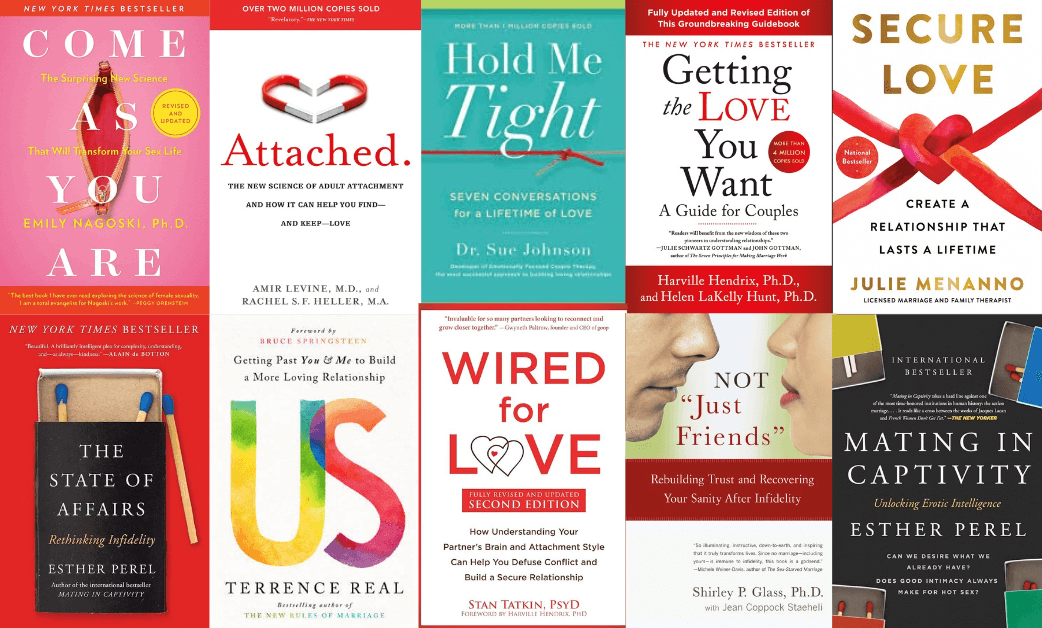
This is why Flagship Matchmaking refuses to lower the bar to coddle the incompetent. We understand that matching two uneducated hearts is an exercise in structural futility. We insist that our clients and candidates read relationship books, study human nature, master attachment theory, and sharpen their cognitive tools before we ever permit them to go on a single introduction. We are forcing people to step off the path of least resistance. We are demanding that they become competent partners, responsible citizens, and deeply thoughtful human beings who possess the linguistic capacity to pass literacy, discipline, and civic virtue down to the next generation.
It is time for the entire relationship industry to follow our lead. Stop treating matchmaking like a mindless digital slot machine. Stop coddling ignorance and validating incompetence. Demand literacy, enforce strict personal accountability, and let us rebuild this country—one educated household, and one brilliant heart, at a time.
References
Aristotle. (350 B.C.E.). Politics (Benjamin Jowett, Trans.). Clarendon Press.
Buschman, J. (2007). Democratic theory in library information science: Toward an emendation. Journal of the American Society for Information Science and Technology, 58(10), 1483–1496. https://doi.org/10.1002/asi.20634
Postman, N. (1985). Amusing Ourselves to Death: Public Discourse in the Age of Show Business. Viking Penguin.
Tocqueville, A. de. (1835). Democracy in America (Henry Reeve, Trans.). Saunders and Otley.